
01
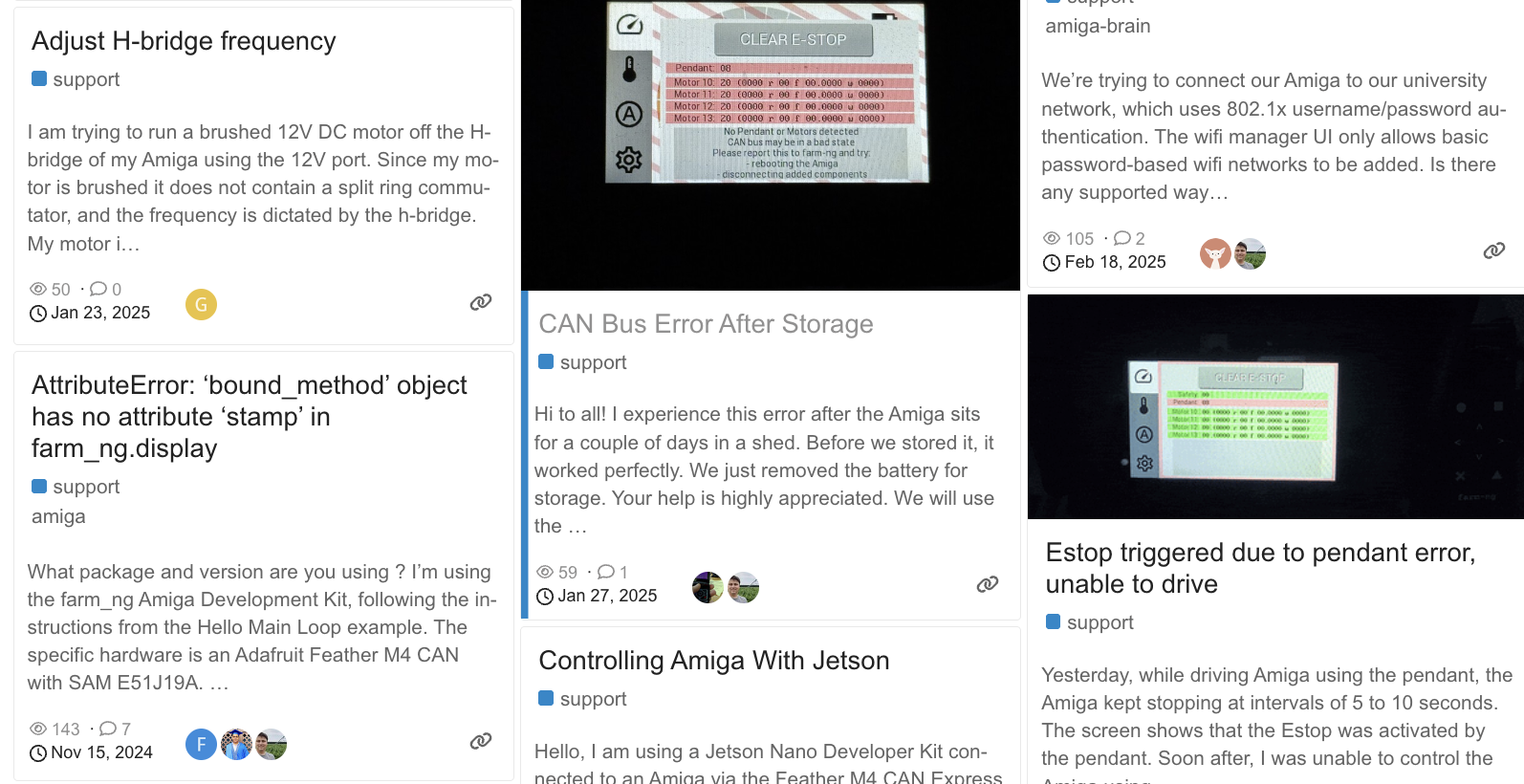
Users had to leave the robot interface to find help.
During my support internship, I saw users rely on documentation, forums, and email to troubleshoot problems in the field. Some issues had known solutions; others required an engineer to investigate with more information from the machine.
02
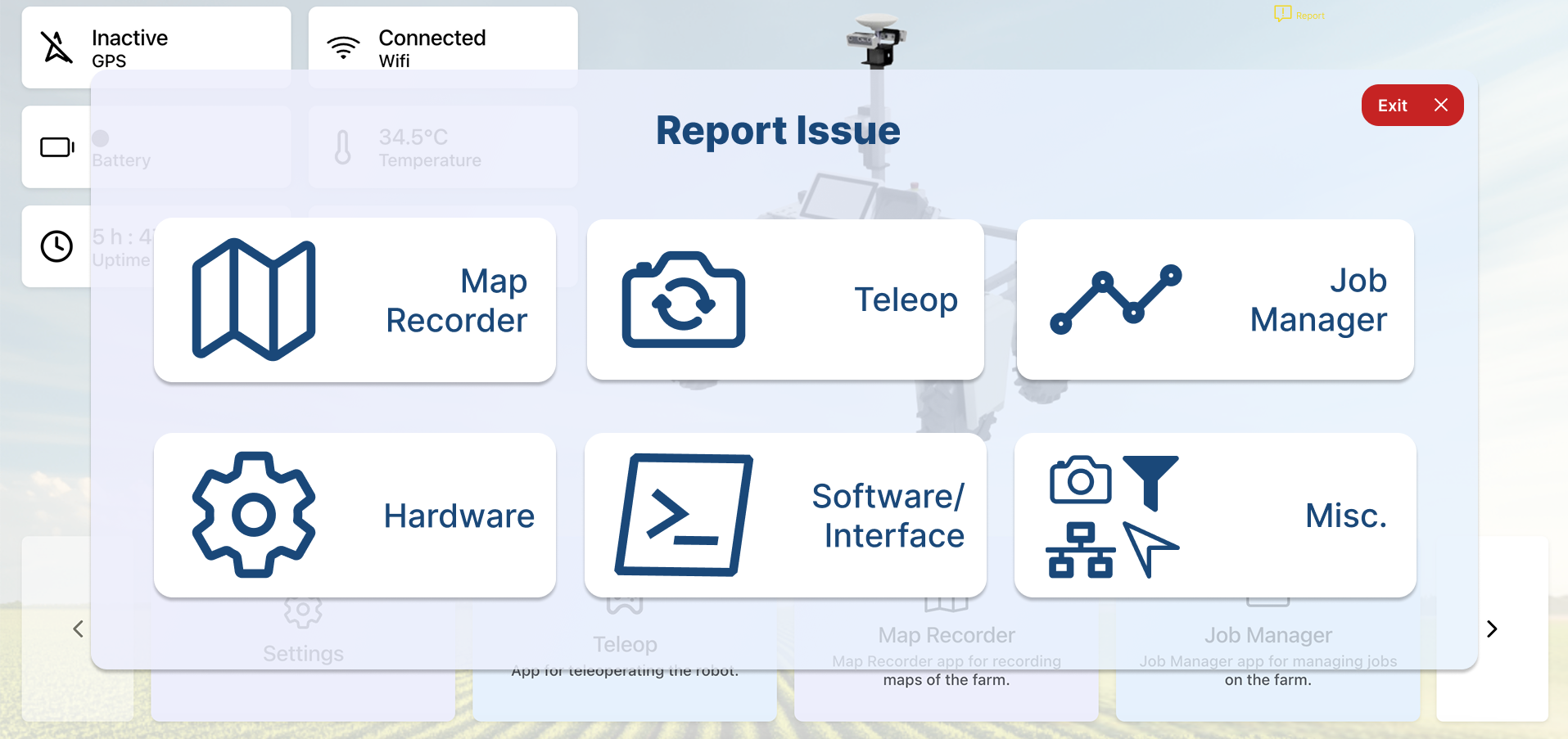
I brought issue reporting into the robot’s interface.
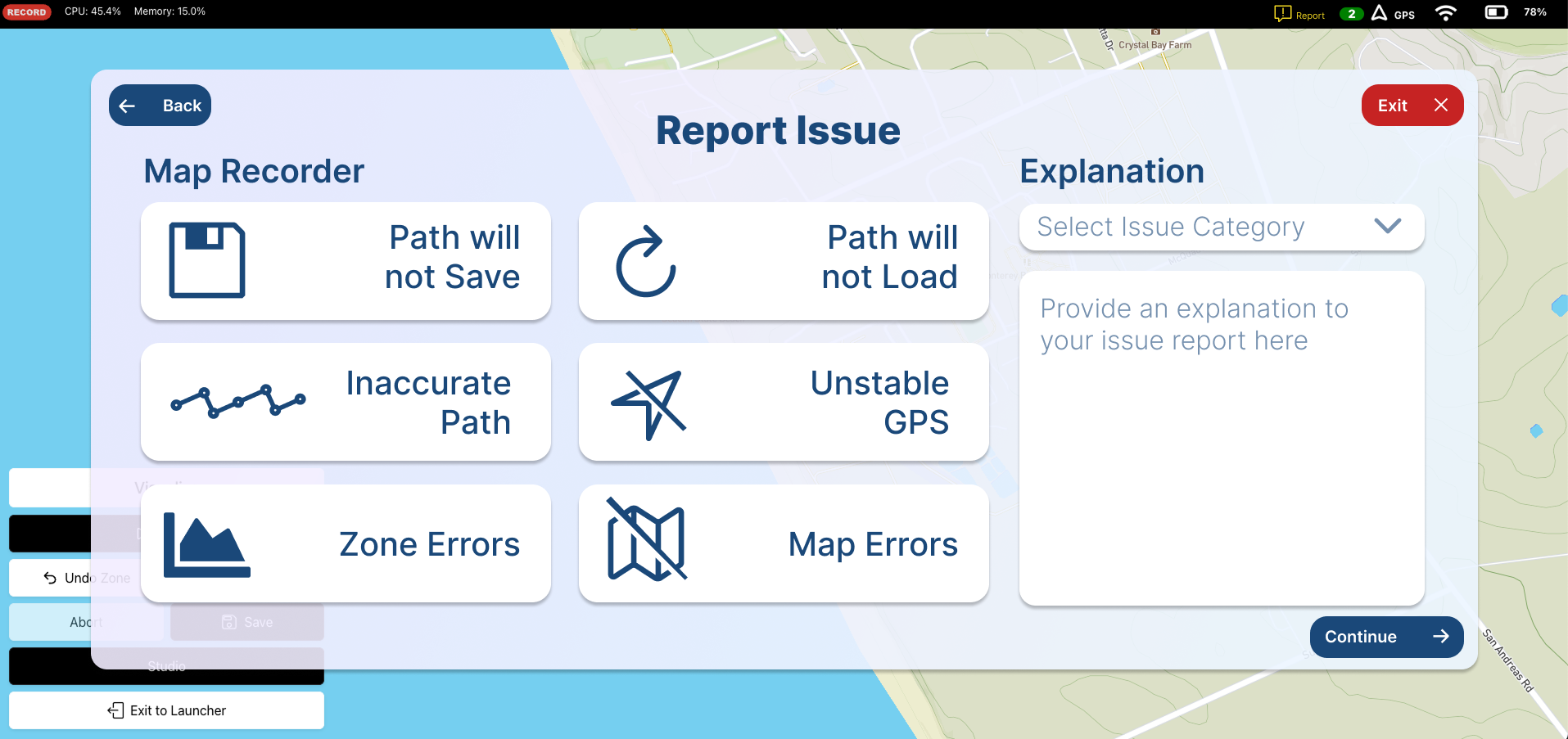
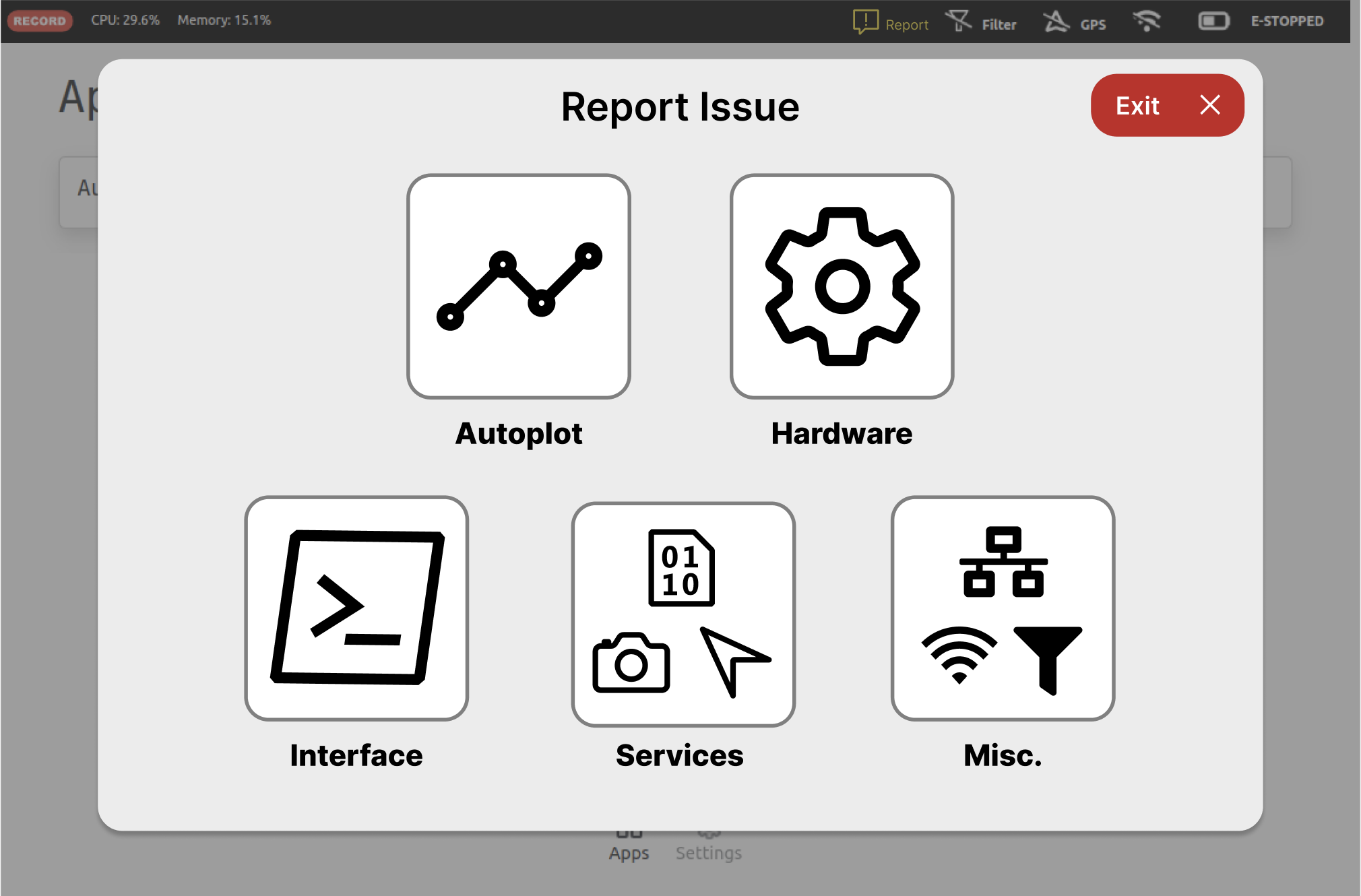
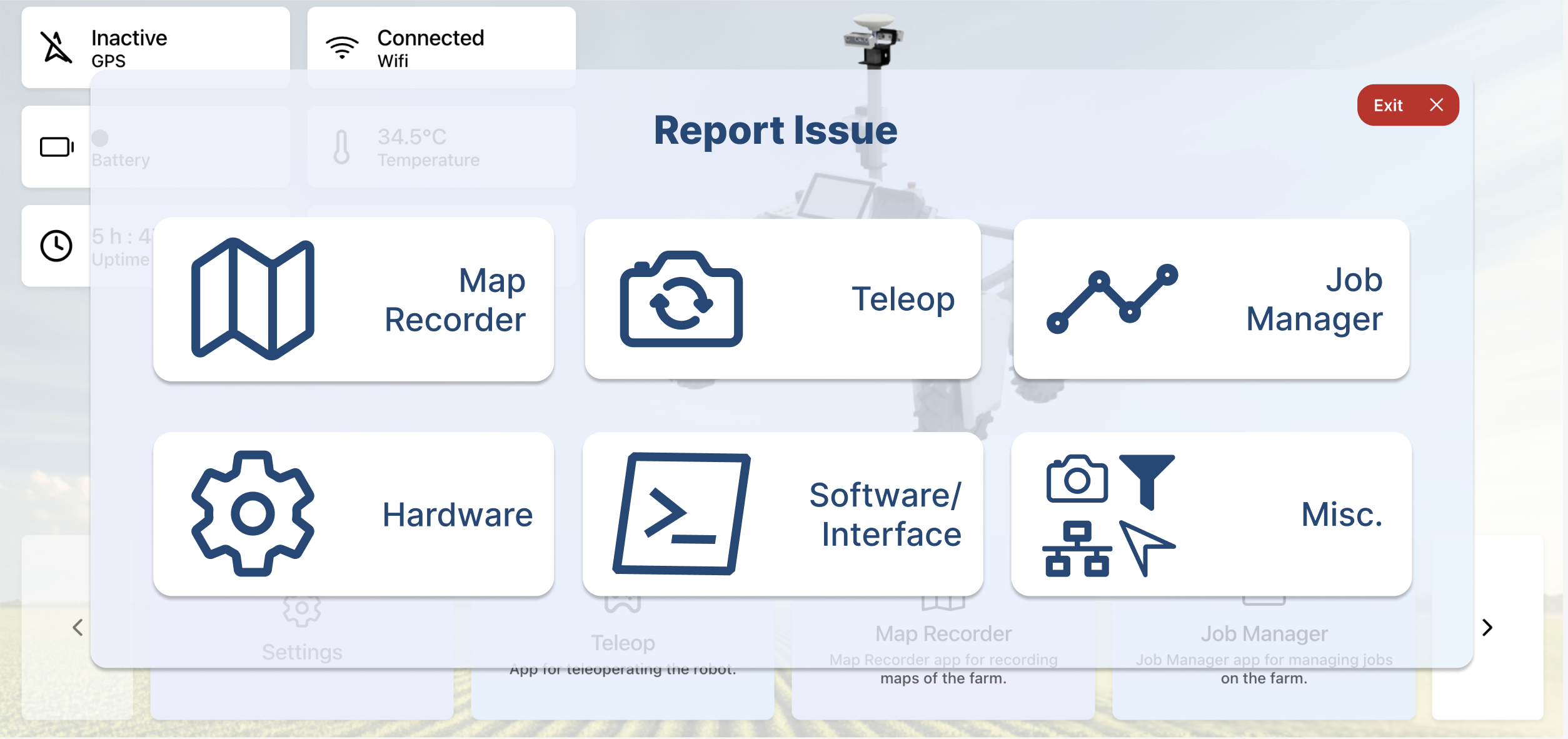
Users could select the affected feature, identify a specific issue, and add an explanation. I used documentation, support emails, and forum posts to inform the categories, with an Other option for unexpected problems.
03
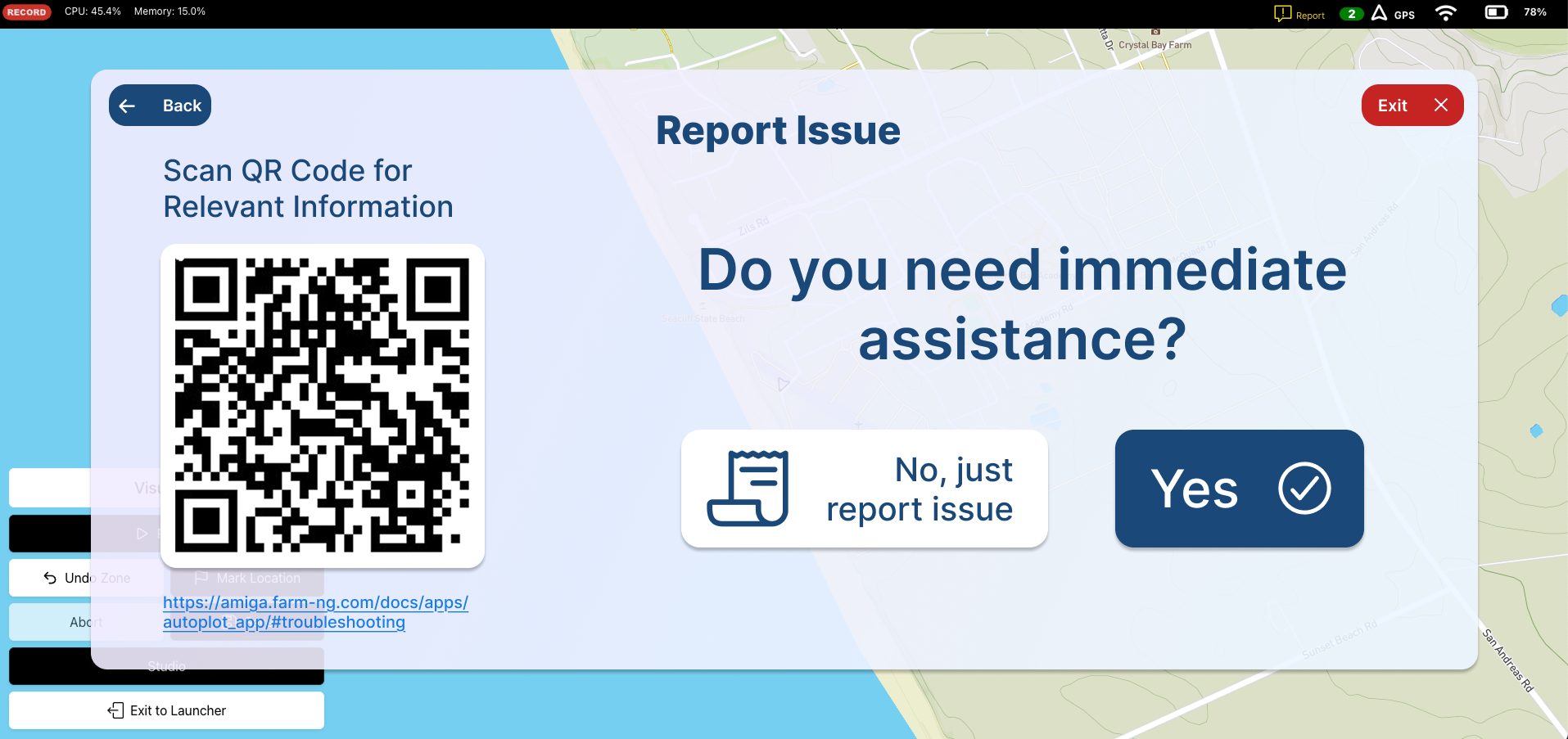
QR codes connected users to relevant troubleshooting guides.
For problems with documented solutions, users could scan a code to open guidance on their phones while staying near the robot. The interface also let them indicate whether they needed immediate assistance.
04
Support requests were designed to include machine data alongside the user’s explanation.
The goal was to give engineers useful diagnostic context upfront. Data from individual wheels was one example that could help explain what was happening on the robot. This functionality was part of the intended workflow, not a validated outcome.
05
I adapted the same support flow to two generations of robot interfaces.
For the older interface, I prioritized large controls, strong contrast, and a simple hierarchy for a smaller screen used outdoors. For the newer interface, I updated the categories, terminology, and styling to fit the existing product.
06
I completed the designs and began development before the acquisition interrupted the project.
With guidance from my mentor, I began implementing the supporting functionality. The feature remained partially implemented and did not reach production or formal user testing.
07
My next step would be testing the flow in real field conditions.
I would evaluate whether users could choose the right category, resolve problems with the suggested documentation, and submit the information support needed. Outdoor testing would also check readability and ease of interaction.